


Winterizing Your Yurt: The Ultimate Cold-Weather Checklist
Winter brings snow, wind, and freezing temperatures — but with a few upgrades and some routine care, your yurt can stay warm, safe, and welcoming all season long.
here’s your step-by-step checklist to make sure your yurt stays warm, dry, and winter-ready all season long.
Insulation, Outer Covers & Weather
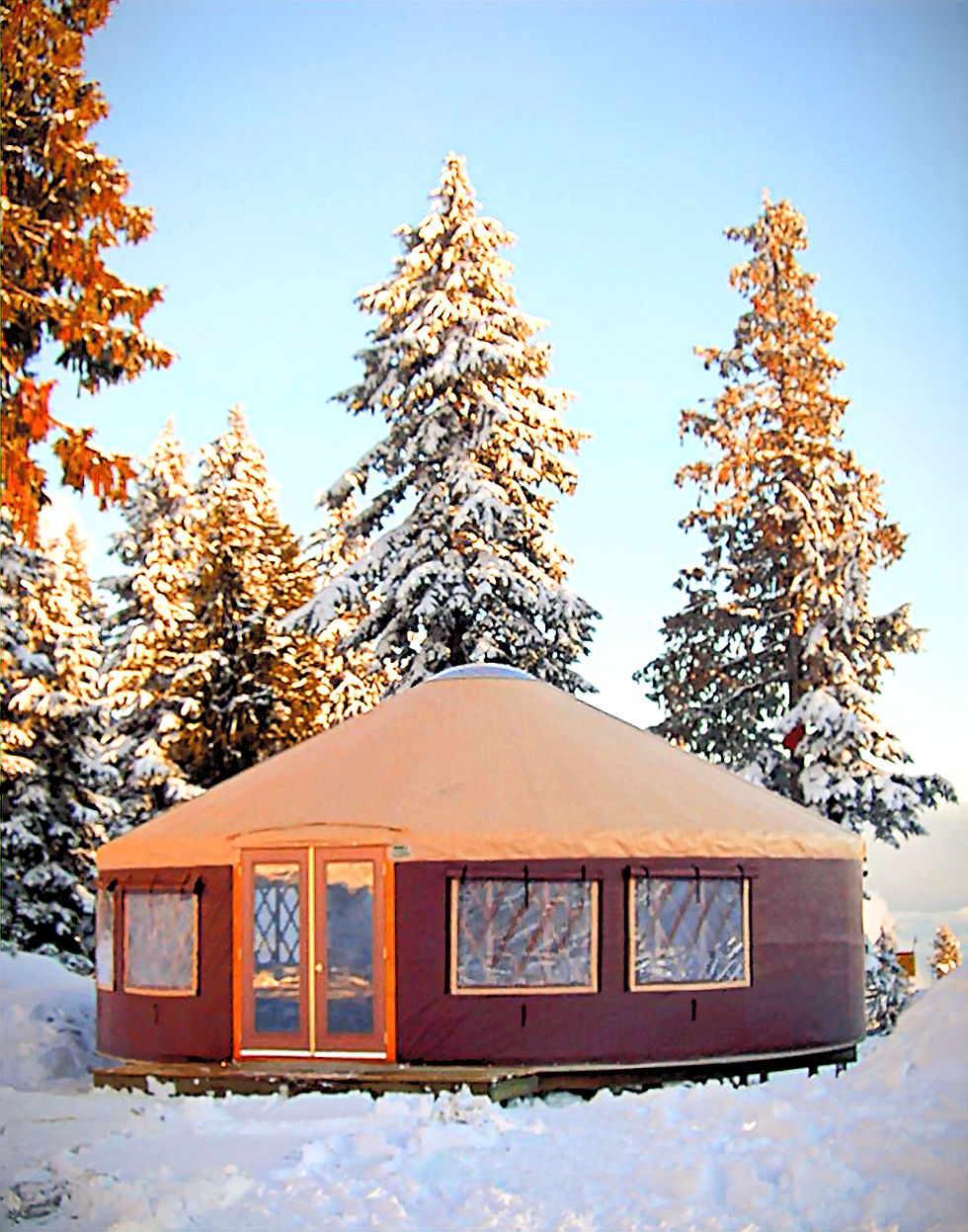
☐ Inspect insulation and liners for damage or wear – Look for tears, holes, or areas where insulation has shifted. Replace or repair damaged sections before winter.
☐ Check seams, edges, zippers, and closures for leaks – Press along seams and roof/wall edges to ensure everything is secure and airtight.
☐ Ensure covers and fasteners are4 tight – Over time covers can loosen, retighten walls, roof, straps, ropes, and door seals as needed to maintain a snug, weatherproof fit.
☐ Verify weatherstripping and door/window seals – Make sure doors and window close tightly and weather stripping is intact
Snow & Wind Support
☐ Inspect and tighten all rafters, lattice joints, and fasteners – Check for any loosened bolts or connections and secure them to maintain structural stability.
☐ Check support poles for damage – Replace or reinforce any damaged poles before winter storms arrive.
☐ Consider using a centre column and brace – For yurts in areas with high winds or heavy snowfall, a centre column with supporting braces provides additional stability.
☐ Verify all supports are properly positioned – Walk around the yurt to confirm supports are secure, evenly spaced, and aligned for balanced load distribution.
☐ Check periodically during heavy snowfall – Monitor supports for stress or shifting and adjust as needed to prevent damage.
Heating Setup
☐ Choose the right heating system – Woo

d stove, propane, electric heater, or heat pump depending on your setup and off-grid needs.
☐ Maintain steady indoor temperature – Avoid letting it swing between very cold and very hot, which stresses the structure and the dome.
☐ Ensure proper ventilation and clearances – Check stove pipes, and heaters for obstructions. Keep combustible materials safely away.
☐ Use a fan to circulate warm air – Helps distribute heat evenly and prevents hot spots near the dome.
☐ Check smoke and carbon monoxide detectors – Replace batteries or test units to ensure safety throughout winter.
Protect the Dome
☐ Avoid overheating the interior – Rapid temperature changes between a hot interior and freezing exterior can warp or crack the dome.
☐ Keep air circulating near the dome – Use a ceiling or stove fan to balance temperatures and reduce stress on the roof.
☐ Cool the yurt gradually if away for days – Don’t shut off heat abruptly; let the interior temperature decrease slowly.
☐ Inspect dome regularly – Look for condensation, small cracks, or signs of wear that could worsen during freezing weather.
Manage Moisture & Condensation
☐ Vent daily – Open a window or dome briefly to refresh the air and prevent moisture buildup.
☐ Use a dehumidifier or moisture absorber – Especially in damp or cold climates to reduce condensation.
☐ Wipe condensation from dome, windows, and doors – Prevents water from soaking into materials.
☐ Consider a liner – Adds extra protection against moisture while maintaining insulation efficiency.
Snow Maintenance
☐ Gently clear snow from the roof – Use a soft broom or roof rake to prevent excess weight and protect the cover.
☐ Keep the yurt perimeter clear – Ensure melting snow drains away to prevent water pooling or flooding.
☐ Check for uneven snow or ice buildup – Inspect after storms to prevent structural stress or damage.

Interior Comforts
☐ Add insulated or layered flooring – Keeps feet warm and reduces heat loss from the floor.
☐ Install thermal curtains or coverings – Retains heat in the evenings and blocks drafts.
Final Safety & Maintenance Check
☐ Clean your fireplace or wood stove – Remove ashes, creosote, and debris to improve efficiency and reduce fire hazards.
☐ Inspect stove pipe and venting – Remove soot or blockages to maintain safe operation.
☐ Check platform for air leaks or gaps – Seal openings to improve insulation and reduce drafts.
☐ Stock up on fuel – Firewood, propane, or backup heating sources should be ready before winter fully sets in.
Your Yurt, Ready for Winter
With your checklist complete, your yurt is set to handle everything winter brings — from heavy snow to chilly nights. The right prep not only keeps your space cozy but also protects your yurt for years to come.
If you’re ready to upgrade before the temperatures drop, explore our Upgrades Page or Contact Our Team for help choosing the best insulation, snow supports, and accessories for your setup. We’re here to make sure your yurt stays warm, efficient, and built to thrive through the season.
Comments